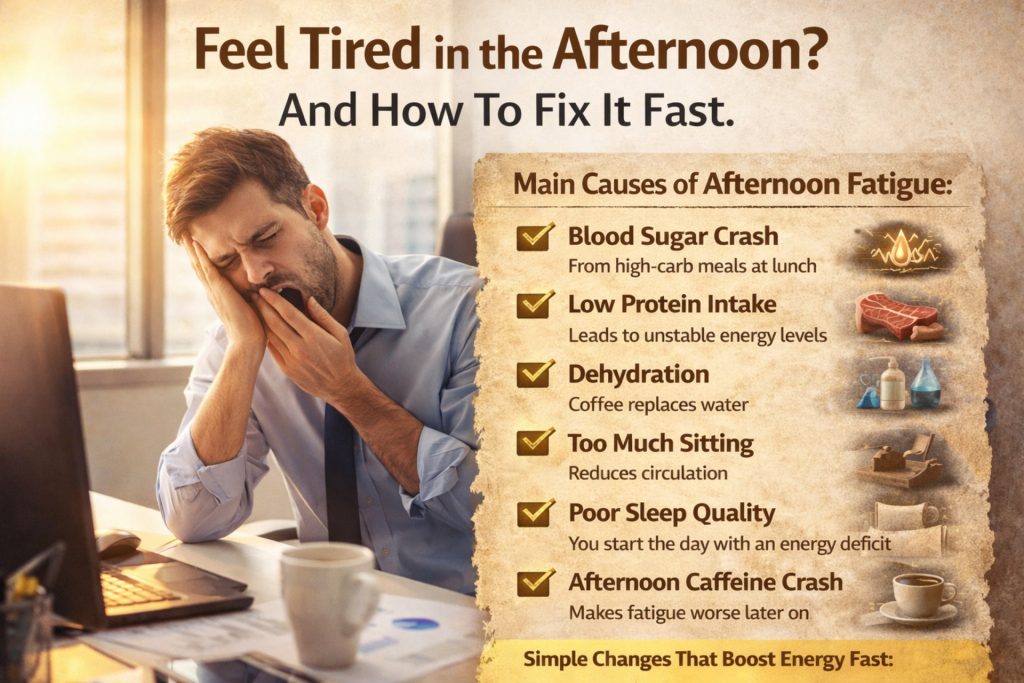
If you feel tired in the afternoon every day, you are not alone. Millions of people experience a sudden drop in energy between 1 PM and 4 PM, often referred to as the “afternoon slump.”
You might think it is normal. You might blame it on a long morning or not sleeping enough. But in most cases, afternoon fatigue is not random — it is caused by specific habits that are disrupting your energy levels.
Understanding what is behind this daily crash is the first step to fixing it.
Why Afternoon Fatigue Happens
Your body follows a natural rhythm called the circadian rhythm. Energy is not constant throughout the day. It rises in the morning, dips in the afternoon, and lowers again at night.
However, modern habits exaggerate this dip and turn it into a full energy crash.
1. Blood Sugar Spikes and Crashes
The most common cause of afternoon fatigue is unstable blood sugar.
If your lunch is high in refined carbohydrates — such as white rice, pasta, bread, or sugary drinks — your blood sugar rises quickly. Your body responds by releasing insulin to lower it.
But often, it drops too fast.
This drop leads to:
- Sudden tiredness
- Brain fog
- Low motivation
- Cravings for sugar or caffeine
2. Low Protein Intake
Protein plays a critical role in maintaining stable energy levels.
When you eat meals low in protein, your body struggles to regulate blood sugar properly. This leads to faster digestion and quicker energy drops.
Protein also supports the production of dopamine and norepinephrine — neurotransmitters responsible for focus and alertness.
Without enough protein, your energy naturally declines.
3. Dehydration
Even mild dehydration can cause fatigue.
By early afternoon, many people have not consumed enough water. Coffee often replaces water, which does not fully hydrate the body.
Dehydration leads to:
- Reduced concentration
- Headaches
- Physical fatigue
4. Lack of Movement
Sitting for long periods slows down circulation and reduces oxygen delivery to the brain.
This leads to sluggishness and low energy.
Your body is designed to move. Without movement, your energy systems downshift.
5. Poor Sleep Quality
If your sleep quality is poor, your body enters the day with an energy deficit.
This deficit often becomes most noticeable in the afternoon when your natural energy dip occurs.
Even if you slept 7–8 hours, poor sleep quality can still cause fatigue.
6. Too Much Caffeine
Caffeine can temporarily increase energy, but it also creates a crash.
When caffeine wears off, adenosine — the chemical responsible for sleepiness — builds up quickly, causing a sudden drop in energy.
This creates a cycle of:
Energy boost → Crash → More caffeine → Worse crash
7. Mental Fatigue
Your brain consumes a significant amount of energy.
Long periods of focused work without breaks drain cognitive resources, leading to mental exhaustion.
This type of fatigue feels like:
- Difficulty focusing
- Slow thinking
- Lack of motivation
How to Fix Afternoon Fatigue Fast
Instead of relying on caffeine, focus on fixing the root causes.
- Eat balanced meals with protein, fiber, and healthy fats
- Drink water consistently throughout the day
- Take short movement breaks every 60–90 minutes
- Limit caffeine after early afternoon
- Get enough high-quality sleep
- Avoid sugary snacks and drinks
Quick Fixes That Work Immediately
If you are already experiencing an afternoon crash, try these:
- Drink a full glass of water
- Take a 10-minute walk
- Eat a protein-based snack
- Step outside for fresh air and light
These simple actions can restore energy within minutes.
The Bottom Line
Afternoon fatigue is not something you have to accept.
It is a signal that your body needs better support through nutrition, hydration, movement, and sleep.
Fix these areas, and your energy will stabilize naturally.
Small changes, done consistently, create lasting energy.