Introduction
You wake up after what should have been a full night of sleep. Seven hours. Maybe eight. You did not stay up late. You did not drink excessive caffeine before bed. And yet, by mid-morning, you are fighting to stay awake, feeling sleepy all day.
You feel slow, unfocused, and tired — as if your sleep never actually happened.
If this sounds familiar, you are not alone. Persistent daytime sleepiness is one of the most common issues people experience today. And in most cases, the cause is not how long you sleep, but how your body is functioning during the day and night.
Many people struggle with this issue, feeling sleepy all day despite their best efforts to rest.
Why Sleeping More Does Not Always Fix Sleepiness
Most people assume that feeling sleepy means they need more sleep. While that can sometimes be true, it is not the full picture.
Your energy levels are controlled by multiple systems working together:
Your circadian rhythm
Your sleep quality
Your diet and hydration
Your stress levels
Your daily movement
If even one of these is out of balance, you can feel tired regardless of how many hours you spend in bed.
This is why simply sleeping longer does not always solve the problem.
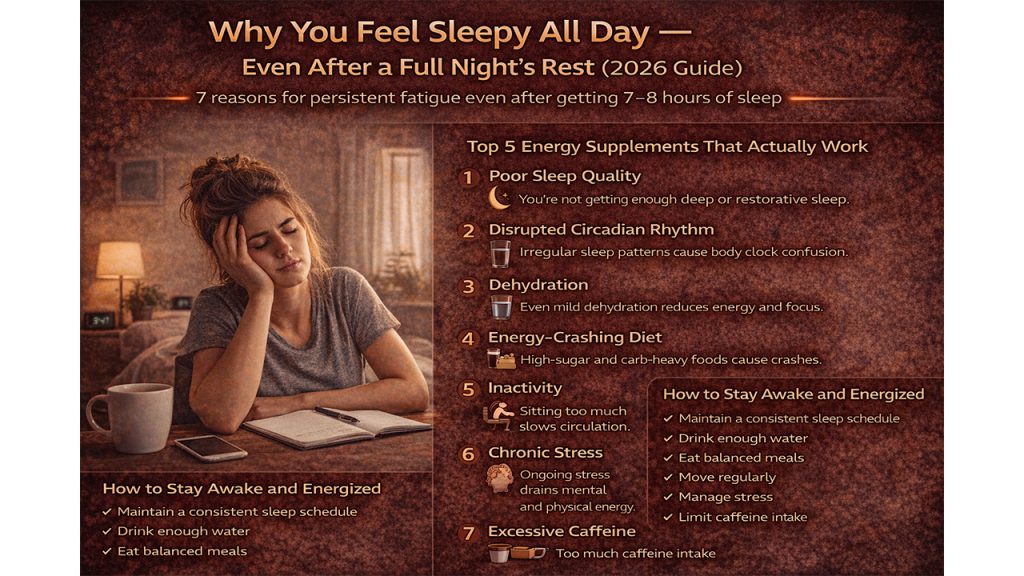
- Your Sleep Quality Is Poor
Sleep is not just about time — it is about depth.
Your body needs deep sleep and REM sleep to recover properly. If your sleep is frequently interrupted or too light, your body does not fully recharge.
Common causes of poor sleep quality include:
Using screens before bed
Sleeping in a noisy or bright environment
Irregular sleep schedules
Even if you are in bed for eight hours, poor sleep quality can leave you feeling exhausted.
Improving sleep quality often has a bigger impact than increasing sleep duration.
- Your Circadian Rhythm Is Disrupted
Your body follows a natural 24-hour cycle called the circadian rhythm.
This system controls when you feel awake and when you feel sleepy.
If your sleep and wake times change frequently, your internal clock becomes confused.
This can lead to feeling tired during the day and alert at night.
One of the biggest mistakes people make is sleeping at different times on weekdays and weekends.
This creates a “jet lag” effect inside your body.
Keeping a consistent sleep schedule is one of the most powerful ways to improve daytime energy.
- You Are Dehydrated
Dehydration is a major but often overlooked cause of fatigue.
Even mild dehydration can reduce concentration, slow reaction time, and increase feelings of sleepiness.
Many people wake up dehydrated and do not drink enough water during the day.
Coffee can temporarily mask this fatigue, but it does not solve the underlying issue.
Proper hydration supports blood flow, brain function, and overall energy levels.
- Your Diet Is Causing Energy Crashes
What you eat directly affects how you feel.
Foods high in sugar and refined carbohydrates can cause rapid spikes and drops in blood sugar.
This leads to short bursts of energy followed by crashes that feel like sudden sleepiness.
Skipping meals or eating unbalanced meals can make this even worse.
A diet that includes protein, healthy fats, and fiber helps maintain stable energy throughout the day.
- You Are Not Moving Enough
Lack of physical activity can make you feel more tired, not less.
When you sit for long periods, your circulation slows down.
Less oxygen reaches your brain and muscles, leading to fatigue.
Movement increases blood flow and activates your body.
Even short walks or light activity can improve alertness and reduce sleepiness.
- Stress Is Draining Your Energy
Chronic stress affects both your body and mind.
It increases cortisol levels, which can disrupt sleep and drain energy.
Mental fatigue from stress can feel just as exhausting as physical fatigue.
When your brain is constantly processing stress, it uses more energy.
Managing stress is essential for maintaining stable energy levels.
- Too Much Caffeine Is Backfiring
Caffeine is often used to fight sleepiness, but too much can have the opposite effect.
It can disrupt your sleep cycle and lead to energy crashes.
Over time, your body builds tolerance, requiring more caffeine for the same effect.
This creates a cycle where caffeine temporarily boosts energy but ultimately makes fatigue worse.
Using caffeine strategically — and not excessively — is important.
How to Stay Awake and Energized
To improve your energy levels, focus on habits that support your body:
Maintain a consistent sleep schedule
Drink enough water
Eat balanced meals
Move regularly
Manage stress
Limit caffeine intake
Small changes can produce noticeable results within days.
Conclusion
Feeling sleepy all day is not something you have to accept.
It is usually caused by a combination of habits that can be improved.
Instead of relying on quick fixes, focus on building a routine that supports your body’s natural energy systems.
When you do that, staying awake and focused becomes much easier.