Introduction
You are tired. Your body feels exhausted. Your eyes are heavy.
But the moment you lie down in bed, your mind refuses to switch off.
You keep thinking, turning, checking the time, and wondering why you cannot fall asleep.
This is one of the most frustrating sleep problems people experience.
And the worst part is, it often happens when you need sleep the most.
Understanding why this happens is the first step to fixing it.
Why Being Tired Does Not Guarantee Sleep
Many people believe that being tired automatically leads to sleep.
But there is a difference between physical fatigue and mental alertness.
You can feel physically exhausted while your brain remains active.
Sleep requires both your body and your mind to relax at the same time.
If your brain is still stimulated, falling asleep becomes difficult.
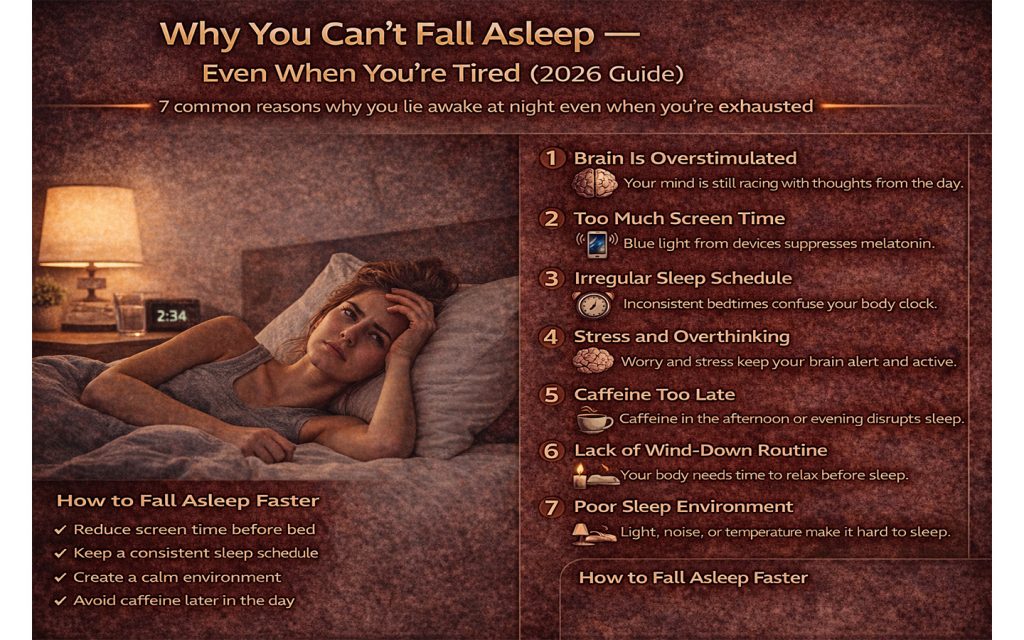
- Your Brain Is Overstimulated
Modern life keeps your brain constantly active.
Social media, videos, work stress, and notifications keep your mind engaged all day.
When you suddenly try to sleep, your brain does not immediately slow down.
It continues processing thoughts, which delays sleep.
This is why you may feel awake even when your body is tired.
Reducing mental stimulation before bed helps your brain transition into sleep mode.
- Too Much Screen Time at Night
Phones, tablets, and computers emit blue light.
This light reduces melatonin, the hormone responsible for sleep.
Using screens late at night signals your brain to stay awake.
Even short exposure can delay sleep and reduce sleep quality.
This is one of the biggest causes of modern sleep problems.
- Irregular Sleep Schedule
Your body follows a natural rhythm.
Sleeping at different times each night confuses your internal clock.
This makes it harder to fall asleep consistently.
Your body needs routine to know when to rest.
Without it, sleep becomes unpredictable.
- Stress and Overthinking
Stress keeps your brain alert.
When you are thinking about problems, your body stays in an active state.
This prevents relaxation and delays sleep.
Many people experience racing thoughts at night.
This is a common reason for insomnia.
- Caffeine Still in Your System
Caffeine can stay in your body for several hours.
Even coffee in the afternoon can affect your sleep.
It blocks the signals that make you feel sleepy.
This can make it difficult to fall asleep, even when you are tired.
- Lack of Wind-Down Routine
Going from high activity to sleep instantly is difficult.
Your body needs time to slow down.
Without a routine, your brain stays active.
A proper wind-down routine signals your body that it is time to sleep.
- Poor Sleep Environment
Light, noise, and temperature all affect sleep.
A bright or noisy room makes it harder to relax.
Even small distractions can delay sleep.
Creating the right environment improves sleep quality.
How to Fall Asleep Faster
Focus on habits that help your body relax:
Reduce screen time before bed
Keep a consistent sleep schedule
Create a calm environment
Avoid caffeine later in the day
Use a simple night routine
Small changes can make a big difference.
Conclusion
Not being able to fall asleep is not random.
It is usually caused by daily habits that keep your brain active.
By improving your routine, you can make falling asleep easier and more natural.
Better sleep starts with better habits.