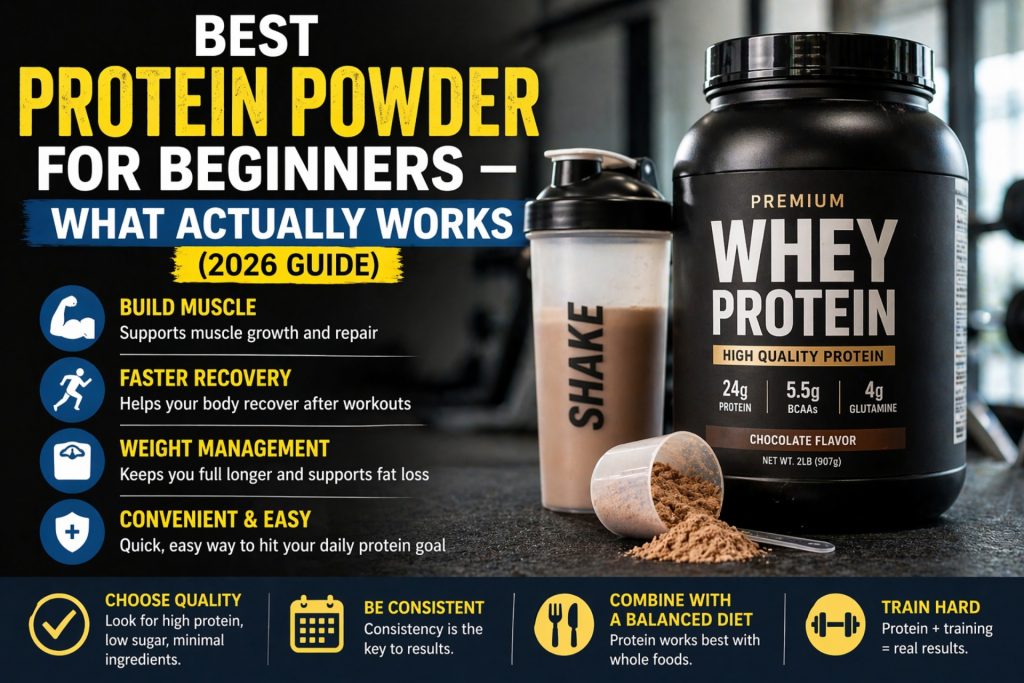
If you are starting your fitness journey, one of the first supplements you will hear about is protein powder. It is everywhere — gyms, social media, fitness blogs — and for good reason.
Protein plays a critical role in muscle growth, recovery, fat loss, and overall health. But the problem is that most beginners have no idea which protein powder to choose.
There are too many options, too many brands, and too many confusing labels.
This guide will simplify everything and help you choose the right protein powder without wasting money.
What Protein Powder Actually Does
Protein is made up of amino acids, which are the building blocks of muscle.
When you exercise, especially strength training, your muscle fibers break down. Protein helps repair and rebuild them stronger.
Without enough protein, your progress slows down.
Protein powder is simply a convenient way to increase your daily protein intake.
Do You Really Need Protein Powder?
Not always.
If you can get enough protein from food — such as chicken, eggs, fish, and dairy — you may not need it.
However, many people struggle to reach their daily protein target through food alone.
That is where protein powder becomes useful.
It is fast, convenient, and effective.
Types of Protein Powder
Understanding the different types is key.
1. Whey Protein
Whey protein is the most popular and best choice for beginners.
It is fast-digesting, high in essential amino acids, and supports muscle recovery.
There are two main types:
- Whey Concentrate (more affordable)
- Whey Isolate (higher protein, lower fat and lactose)
2. Plant-Based Protein
Plant-based protein is ideal for vegans or people with dairy intolerance.
Common sources include:
- Pea protein
- Rice protein
- Soy protein
It is slightly slower to digest but still effective.
3. Casein Protein
Casein digests slowly and is often taken before sleep.
It provides a steady release of amino acids over several hours.
How Much Protein Do You Need?
For beginners:
- 1.6 to 2.0 grams per kg of body weight
Example:
If you weigh 70 kg →
You need around 110–140 grams per day.
When Should You Take Protein?
Timing is flexible.
The most important factor is total daily intake.
However, these times are effective:
- After workouts
- In the morning
- Between meals
What to Look for When Buying Protein
Do not just buy the cheapest option.
Check these:
- Protein per serving (20g+)
- Low sugar
- Minimal artificial ingredients
- Trusted brand
Avoid products with long, confusing ingredient lists.
Common Beginner Mistakes
Avoid these mistakes:
- Thinking protein powder replaces meals
- Taking too much at once
- Ignoring total daily intake
- Choosing based on hype, not quality
Does Protein Powder Help With Fat Loss?
Yes — indirectly.
Protein helps:
- Increase fullness
- Reduce cravings
- Maintain muscle while dieting
This makes fat loss easier and more sustainable.
Simple Daily Protein Plan
Here is a basic example:
- Breakfast: Eggs or yogurt
- Lunch: Chicken or fish
- Snack: Protein shake
- Dinner: Balanced meal
This makes hitting your protein goal much easier.
The Bottom Line
Protein powder is not magic.
But it is one of the simplest and most effective tools to improve your fitness results.
Start with a basic whey protein, keep your intake consistent, and focus on your overall diet.
That alone will put you ahead of most beginners.