Why You’re Not Losing Weight — Even When You Eat Less (2026)
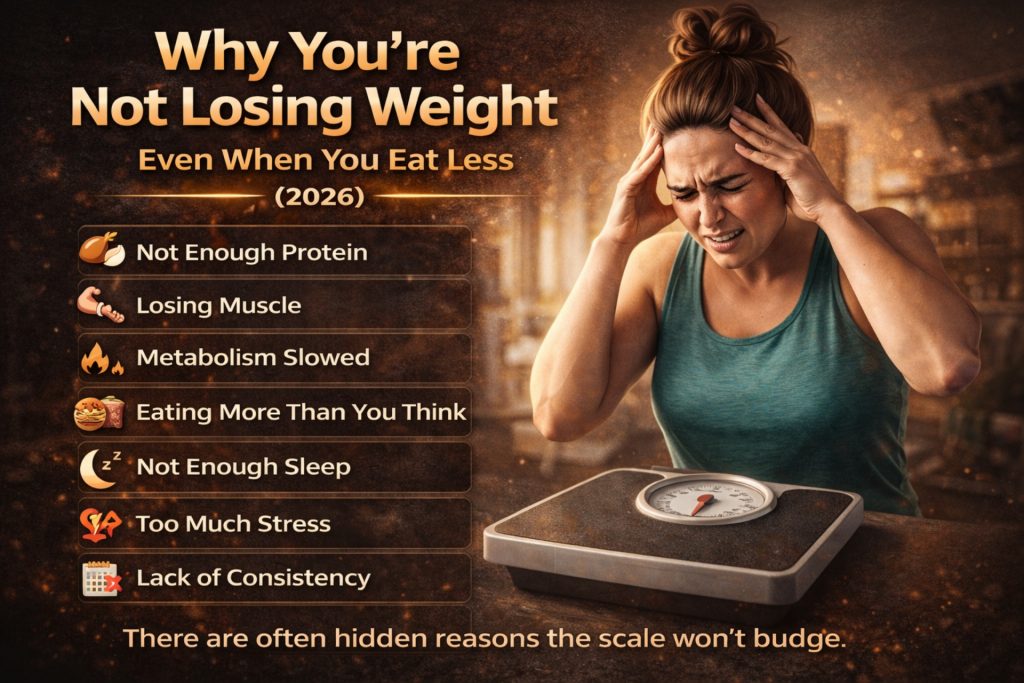
You have cut back on portions. You are skipping dessert. You are making an effort. But the number on the scale has not moved in weeks.
If this sounds familiar, you are not alone — and more importantly, you are not doing anything wrong. The reality is that weight loss is far more complex than simply eating less and moving more.
When progress stalls despite effort, there are always specific reasons behind it.
Why Eating Less Does Not Always Lead to Fat Loss
The idea that weight loss is just calories in versus calories out is technically true, but overly simplified.
Your body is a complex system that adapts to change. When you consistently eat less, your body reduces energy use to protect itself.
This includes slowing metabolism, reducing movement, and adjusting hormones.
This process is called metabolic adaptation, and it is one of the main reasons weight loss stops.
- You Are Not Eating Enough Protein
Protein plays a critical role in fat loss.
It helps maintain muscle, keeps you full longer, and increases calorie burn during digestion.
Without enough protein, your body may break down muscle instead of fat.
Most people trying to lose weight benefit from 1.6 to 2.4 grams of protein per kilogram of body weight.
- You Are Losing Muscle Instead of Fat
Weight loss is not always fat loss.
Without strength training, your body may lose muscle along with fat.
This slows your metabolism and makes future weight loss harder.
Adding resistance training even a few times per week can help preserve muscle.
- Your Metabolism Has Adapted
When you stay in a calorie deficit for too long, your metabolism slows down.
Your body burns fewer calories, reducing the effectiveness of your diet.
Taking short breaks from dieting can help reset this response.
- You Are Underestimating Calories
Hidden calories are one of the biggest reasons weight loss stalls.
Cooking oils, sauces, drinks, and snacks can add up quickly.
Tracking your food accurately for a short period can reveal where extra calories are coming from.
- Poor Sleep Is Affecting Your Progress
Sleep directly impacts hunger and fat storage hormones.
Lack of sleep increases appetite and cravings, making it harder to stay in a calorie deficit.
Aim for consistent, quality sleep every night.
- Stress Is Slowing Fat Loss
High stress levels increase cortisol, which promotes fat storage.
Stress also increases cravings and reduces energy levels.
Managing stress is essential for long-term fat loss.
- Lack of Consistency
Many people are consistent during the week but lose control on weekends.
This can cancel out the calorie deficit created during the week.
Fat loss depends on weekly consistency, not just daily effort.
How to Fix It
Instead of eating less, focus on improving your overall approach.
Increase protein intake
Add strength training
Improve sleep quality
Track food more accurately
Manage stress levels
Small adjustments can make a big difference.
Conclusion
If you are eating less but not losing weight, the issue is not effort.
It is usually one or more hidden factors affecting your progress.
Weight loss requires more than just cutting calories. It requires balance, consistency, and the right habits.
Address the cause, and the results will follow.