Why You Wake Up Tired Every Day — 7 Hidden Reasons (2026)
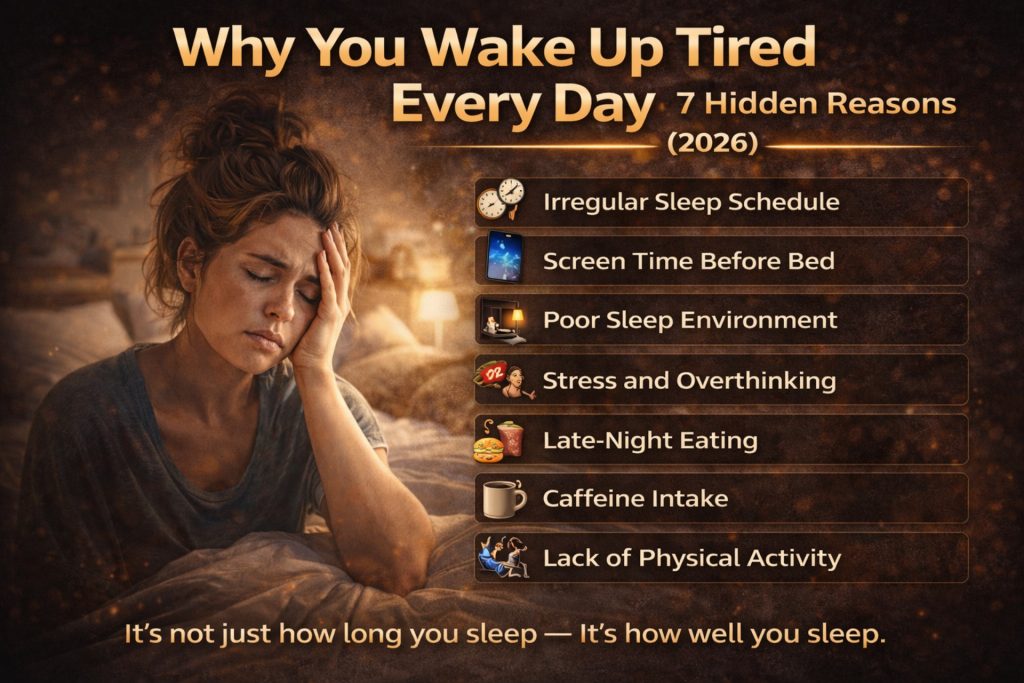
You went to bed at a reasonable hour. You slept for seven or eight hours. But when your alarm went off, you still felt exhausted.
If this happens often, the problem is not how long you sleep. It is how well you sleep.
Sleep quality determines how much time your body spends in deep, restorative stages. Without enough deep sleep and REM sleep, you will wake up tired no matter how long you stay in bed.
Why Sleep Quality Matters More Than Sleep Duration
Sleep is made up of cycles that include light sleep, deep sleep, and REM sleep.
Deep sleep supports physical recovery, while REM sleep supports brain function and memory.
If these cycles are disrupted, your body cannot fully recover.
- Your Sleep Schedule Is Irregular
Your body follows a circadian rhythm.
Going to bed at different times disrupts this rhythm and reduces sleep quality.
Keeping a consistent wake-up time is one of the most effective ways to improve sleep.
- Screen Use Before Bed
Blue light from phones and screens reduces melatonin production.
This delays sleep and reduces deep sleep quality.
Reducing screen time before bed helps your body prepare for sleep naturally.
- Poor Sleep Environment
Your bedroom should be cool, dark, and quiet.
High temperatures, light exposure, and noise can disrupt sleep cycles.
Simple changes like blackout curtains and lowering room temperature can improve sleep.
- Stress and Overthinking
Stress increases cortisol, which keeps your body in an alert state.
This prevents deep and restful sleep.
Simple relaxation habits before bed can help reduce mental activity.
- Eating Too Late
Eating close to bedtime increases body temperature and digestion activity.
This interferes with sleep cycles and reduces deep sleep.
Finishing meals earlier can improve sleep quality.
- Caffeine Intake
Caffeine stays in your system for several hours.
Even afternoon caffeine can affect sleep.
Avoid caffeine later in the day to improve sleep quality.
- Lack of Physical Activity
Regular movement helps your body enter deeper sleep.
A sedentary lifestyle reduces the need for recovery, leading to lighter sleep.
Daily activity improves both sleep quality and energy levels.
How to Improve Your Sleep
Focus on simple habits:
Keep a consistent sleep schedule
Reduce screen time before bed
Improve your sleep environment
Manage stress levels
Avoid late meals and caffeine
Stay active during the day
Small changes can significantly improve your sleep.
Conclusion
Waking up tired is not normal. It is usually caused by poor sleep quality rather than lack of sleep.
By improving your habits, you can restore your energy and feel more refreshed every morning.
Better sleep leads to better performance, better health, and a better daily life.