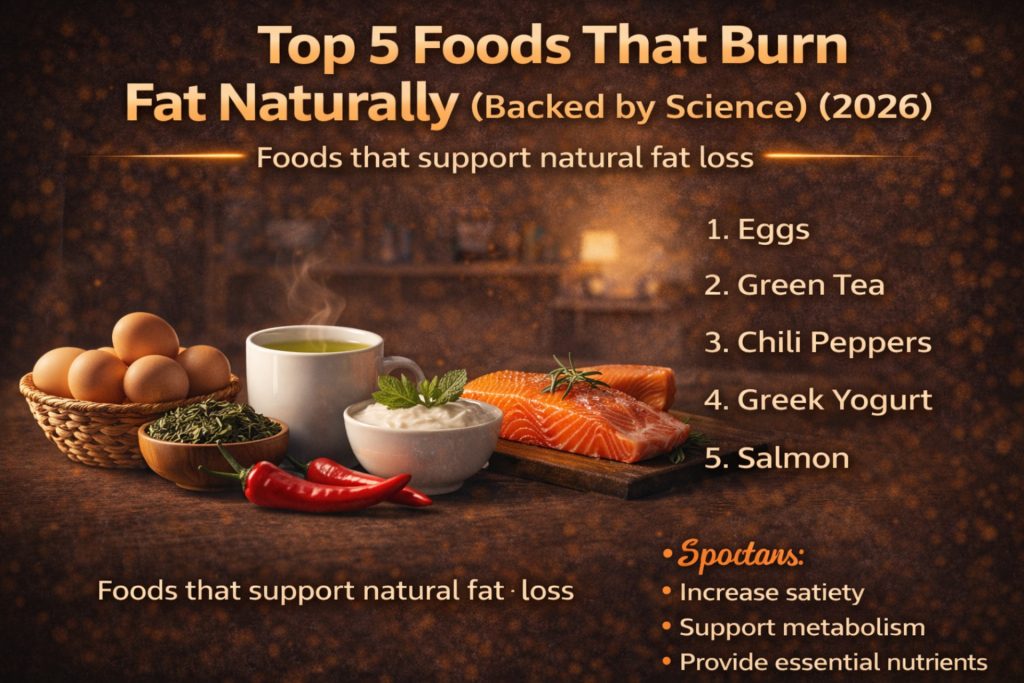
[Introduction]
Many people believe fat loss is purely a numbers game — eat less, weigh less. And while calories absolutely matter, emerging research shows that the type of food you eat plays a significant role too. Certain foods can boost your metabolism, suppress appetite, preserve lean muscle, and help your body tap into stored fat more efficiently.
This guide covers five foods that are consistently supported by science as natural allies in fat loss — and explains exactly why they work.
- Eggs
Eggs are one of the most nutrient-dense and fat-loss-friendly foods you can eat. A single large egg contains around 6 grams of high-quality protein along with essential vitamins and minerals — all for roughly 70 calories.
Protein has the highest thermic effect of any macronutrient, meaning your body burns more calories just digesting it. Eating eggs for breakfast has been shown in multiple studies to significantly reduce hunger and total calorie intake throughout the day compared to carbohydrate-heavy breakfasts like bagels.
Eggs also contain choline, a nutrient that plays a direct role in fat metabolism and liver health. The yolk is where most of the nutrition lives — do not skip it.
✅ Best way to eat: Whole eggs, boiled or poached, at breakfast to reduce overall daily calorie intake naturally. - Green Tea
Green tea is one of the most well-researched beverages for fat loss. Its benefits come primarily from a group of antioxidants called catechins — particularly EGCG (epigallocatechin gallate) — which work alongside caffeine to stimulate the nervous system and signal fat cells to break down stored fat.
Several studies show that green tea extract can increase fat oxidation by 10–17%, especially during exercise. Even without exercise, regular consumption has been linked to modest but meaningful reductions in body fat over time, particularly around the abdominal area.
It is also virtually calorie-free, making it one of the easiest additions to any fat-loss diet.
✅ Best way to drink: 2–3 cups per day, ideally before or during exercise for maximum fat-burning benefit. - Chili Peppers
Chili peppers contain a compound called capsaicin, which is responsible for their heat — and their fat-burning properties. Capsaicin activates the sympathetic nervous system, which temporarily increases metabolic rate and promotes the use of fat as fuel.
Research suggests capsaicin can increase calorie burning by around 50–100 calories per day when consumed consistently, and it has also been shown to reduce appetite and cravings, particularly for fatty and salty foods.
Over time, the appetite-suppressing effect may diminish slightly as tolerance builds — but the metabolic boost tends to remain. Even if the numbers seem small, combined with other dietary strategies, capsaicin can make a noticeable difference.
✅ Best way to eat: Add fresh chili, cayenne pepper, or hot sauce to meals regularly. Capsaicin supplements are also available for those who cannot tolerate spicy food. - Greek Yogurt
Greek yogurt is one of the most protein-dense foods available, with a typical serving containing 15–20 grams of protein — roughly double that of regular yogurt. This high protein content supports satiety, reduces cravings, and most importantly, helps preserve lean muscle mass during a calorie deficit.
Muscle tissue burns more calories at rest than fat tissue. The more muscle you maintain during fat loss, the higher your resting metabolic rate stays — which means your body continues burning fat even when you are not exercising.
Greek yogurt also contains probiotics that support gut health, which is increasingly linked to healthy weight regulation. Choose plain, full-fat or low-fat varieties and avoid versions with added sugar.
✅ Best way to eat: Plain Greek yogurt with berries as a snack or breakfast. Check labels and choose options with minimal added ingredients. - Salmon
Salmon is one of the most powerful fat-loss foods available because it delivers two things your body needs during weight loss: high-quality protein and omega-3 fatty acids.
The protein in salmon supports muscle maintenance and increases satiety. The omega-3s — specifically EPA and DHA — help reduce chronic inflammation, which is strongly associated with obesity and metabolic dysfunction. Studies also suggest omega-3s improve insulin sensitivity, which makes it easier for your body to use stored fat as energy rather than storing more.
Fatty fish like salmon eaten 2–3 times per week has been linked to greater reductions in belly fat compared to diets low in omega-3s, even with the same calorie intake.
✅ Best way to eat: Baked or grilled, 2–3 times per week. Wild-caught salmon tends to have a better omega-3 to omega-6 ratio than farmed varieties.
[Why These Foods Actually Work]
These five foods are not fat-burning miracles. What they share is a combination of scientifically supported mechanisms that make fat loss easier and more sustainable:
They increase satiety, so you naturally eat less without feeling deprived. They support or elevate metabolism through protein digestion, thermogenesis, or direct metabolic stimulation. They preserve muscle mass during a calorie deficit, keeping your metabolic rate from dropping. They reduce inflammation and support hormonal balance, addressing some of the root causes of stubborn fat.
Used consistently as part of a whole-food diet, they create conditions where fat loss becomes more efficient — not because of any single food, but because of the compound effect of eating well.
[Conclusion]
No single food will transform your body on its own. But the foods you choose consistently either work for or against your fat-loss goals. Eggs, green tea, chili peppers, Greek yogurt, and salmon are all practical, affordable, and backed by real research.
Build your diet around whole, nutrient-rich foods, control your overall calorie intake, and let these five foods do the supporting work. Consistency over time beats any short-term diet every time.
⚠️ Disclaimer: This article is for informational purposes only. Consult a healthcare or nutrition professional before making significant changes to your diet.