[Introduction]
Belly fat is one of the most frustrating problems in weight loss. You can follow a strict diet, exercise regularly, and still find that your midsection is the last place to change. If that sounds familiar, you are not doing anything wrong — belly fat simply behaves differently from fat in other areas of the body.
The good news is that science has a clear answer for what actually works. It is not a single trick or a trending diet. It is a combination of specific, sustainable habits that target the root causes of abdominal fat storage. This guide breaks all of them down.
[Why Belly Fat Is So Hard to Lose]
Not all fat is created equal. Belly fat — particularly visceral fat, which surrounds your internal organs — is metabolically active and highly sensitive to hormonal signals. Two hormones in particular drive its accumulation: cortisol (the stress hormone) and insulin (the hormone that regulates blood sugar and fat storage).
When cortisol is chronically elevated due to stress, poor sleep, or overtraining, your body is literally programmed to store fat around the abdomen. When insulin levels are consistently high due to excess sugar and refined carbohydrate intake, fat cells in the midsection are prioritized for storage over other areas.
This is why doing hundreds of sit-ups has no meaningful effect on belly fat. You cannot spot-reduce fat through exercise alone. What you can do is address the hormonal and lifestyle drivers that are causing it in the first place.
[What Actually Works]
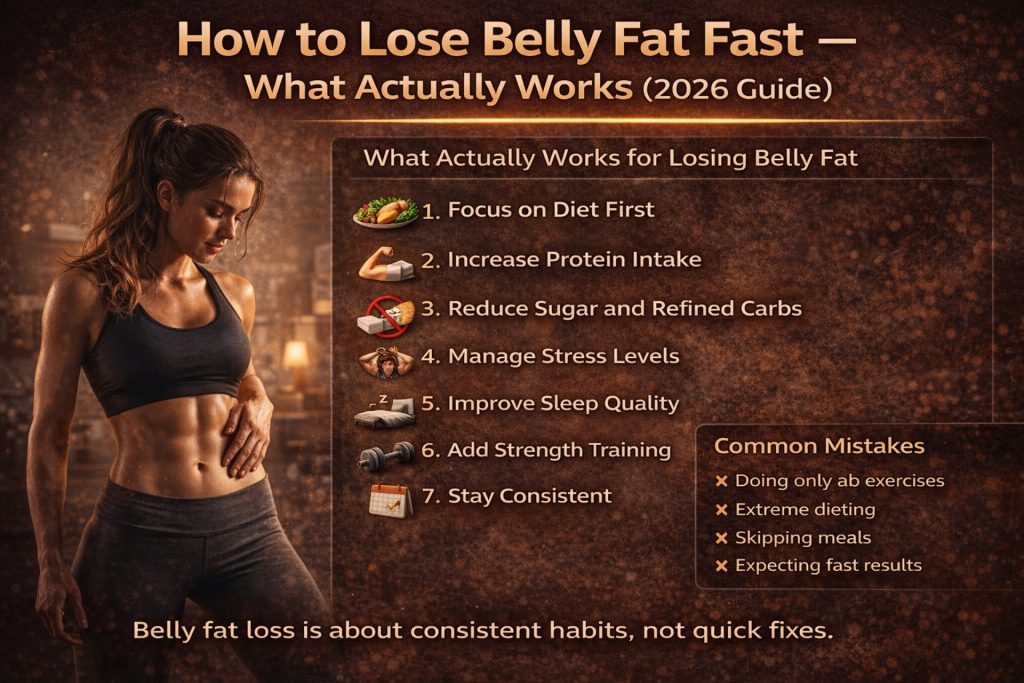
- Fix Your Diet First
No workout routine can outrun a poor diet when it comes to belly fat. The food you eat directly controls your insulin levels, inflammation, and total calorie balance — all of which determine where and how much fat your body stores.
The most effective dietary shift is moving away from ultra-processed foods, added sugars, and refined grains toward whole foods: vegetables, lean protein, legumes, nuts, and healthy fats. You do not need to count every calorie, but reducing the foods that spike insulin consistently will produce visible results in the midsection over time.
A simple rule: if it comes in a package with more than five ingredients, eat it less often. - Increase Protein Intake
Protein is the single most powerful dietary tool for fat loss — and most people do not eat enough of it. High protein intake reduces hunger by lowering ghrelin (the hunger hormone) and increasing satiety hormones. It also has a high thermic effect, meaning your body burns more calories just digesting it compared to carbohydrates or fats.
Most importantly for belly fat specifically, adequate protein helps preserve lean muscle mass during a calorie deficit. More muscle means a higher resting metabolic rate, which means your body burns more fat around the clock — including in the abdominal area.
Aim for 1.6–2.2 grams of protein per kilogram of body weight daily. Prioritize whole food sources like eggs, chicken, fish, Greek yogurt, legumes, and cottage cheese. - Cut Sugar and Refined Carbohydrates
If there is one dietary change that has the most direct impact on belly fat, this is it. Sugar — particularly fructose found in sweetened beverages, candy, and processed snacks — is metabolized primarily in the liver. When consumed in excess, it is converted directly into fat, much of which is deposited as visceral belly fat.
Refined carbohydrates like white bread, white rice, and pasta cause rapid spikes in blood sugar and insulin, creating an environment in the body that favors fat storage over fat burning. Replacing these with fiber-rich alternatives — whole grains, vegetables, and legumes — stabilizes blood sugar and significantly reduces abdominal fat accumulation over time.
Start by eliminating liquid sugar: sodas, fruit juices, energy drinks, and sweetened coffees. This single change alone can make a visible difference within weeks. - Manage Stress Levels
Chronic stress is one of the most overlooked drivers of stubborn belly fat. When you are under sustained stress, your adrenal glands release cortisol continuously. Elevated cortisol increases appetite, triggers cravings for high-calorie comfort foods, and directly promotes fat storage in the abdominal region.
Stress management is not optional if belly fat is your goal — it is a core part of the strategy. Effective approaches include regular physical activity, mindfulness meditation, time in nature, limiting news and social media consumption, and building consistent downtime into your daily routine.
Even 10 minutes of focused breathing or a short walk after meals can meaningfully lower cortisol over time. - Prioritize Sleep Quality
Poor sleep and belly fat are directly connected through hormonal disruption. Sleeping less than 7 hours per night increases ghrelin (hunger hormone), decreases leptin (fullness hormone), and elevates cortisol — a triple combination that makes overeating almost inevitable and fat burning significantly less efficient.
A landmark study found that people who slept 5.5 hours per night lost 55% less belly fat over 14 weeks compared to those sleeping 8.5 hours, even with identical diets. Sleep is not recovery time for belly fat loss — it is active fat-burning time.
Prioritize 7–9 hours of quality sleep. Fix your sleep schedule, reduce screens before bed, keep your room cool and dark, and avoid caffeine after 2 PM. - Add Strength Training
Cardio burns calories during exercise, but strength training changes your body composition permanently. Building lean muscle increases your basal metabolic rate — the number of calories your body burns at rest — which directly accelerates fat loss 24 hours a day, not just during your workout.
Research consistently shows that a combination of strength training and moderate cardio produces far greater reductions in visceral belly fat than cardio alone. Compound movements that engage multiple large muscle groups — squats, deadlifts, rows, presses — deliver the most hormonal and metabolic benefit per session.
Aim for 3 strength training sessions per week. You do not need a gym — bodyweight training done progressively is highly effective. - Stay Consistent Above All Else
Belly fat — especially visceral fat — responds to sustained lifestyle change, not short-term efforts. Most people see meaningful results in 8–12 weeks of consistent habits. The people who fail are not those who chose the wrong diet or exercise program; they are the ones who quit too early or bounce between extreme approaches.
Pick habits you can maintain for months, not days. A moderate approach you can sustain for six months will always beat an extreme approach you abandon after two weeks.
[Common Mistakes That Slow Your Progress]
Focusing only on ab exercises is one of the most common errors — crunches build muscle underneath the fat but do nothing to remove it. Extreme calorie restriction causes muscle loss and metabolic slowdown, making belly fat harder to lose long-term. Skipping meals often leads to overcorrection later in the day and disrupts insulin regulation. Expecting fast results leads to abandoning effective habits before they have time to work. Belly fat is typically the last area to visibly change — trust the process.
[Conclusion]
Losing belly fat is not complicated, but it does require addressing the right problems. Hormones, sleep, stress, diet quality, and muscle mass all interact to determine how much fat your body stores in your midsection — and all of them are within your control.
Start with the two highest-impact changes: reduce sugar and refined carbs, and increase protein intake. Add strength training and fix your sleep. Manage your stress consistently. Then stay patient. The results will come — and when they do, they will last.
⚠️ Disclaimer: This article is for informational purposes only and does not constitute medical advice. Consult a healthcare professional before making significant changes to your diet or exercise routine.