[Introduction]
“How much water should I drink every day?”
It sounds like a simple question, but the answer is more complex than most people expect.
For years, people have followed the “8 glasses a day” rule. It is easy to remember, but it is not accurate for everyone. Your body is not a fixed system, and your hydration needs change depending on your lifestyle, body size, diet, and environment.
Some people drink too little water and feel constantly tired, unfocused, and sluggish without realizing dehydration is the cause. Others try to drink a lot of water at once but still do not feel better because they are not drinking it correctly.
Understanding how much water your body truly needs — and how to consume it properly — can have a powerful impact on your energy levels, digestion, mental clarity, and even fat loss.
[Why Water Is Essential for Your Body]
Your body is made up of approximately 60% water, and nearly every function depends on it.
Water plays a critical role in:
- Cellular energy production
- Brain performance and focus
- Blood circulation and oxygen delivery
- Digestion and nutrient absorption
- Body temperature regulation
- Removal of toxins and waste
Even a small drop in hydration levels can affect how your body performs.
Research shows that losing just 1–2% of your body’s water can lead to fatigue, headaches, reduced concentration, and lower physical performance. This means that many people who feel “low energy” throughout the day are actually just underhydrated.
[The Most Accurate Daily Water Formula]
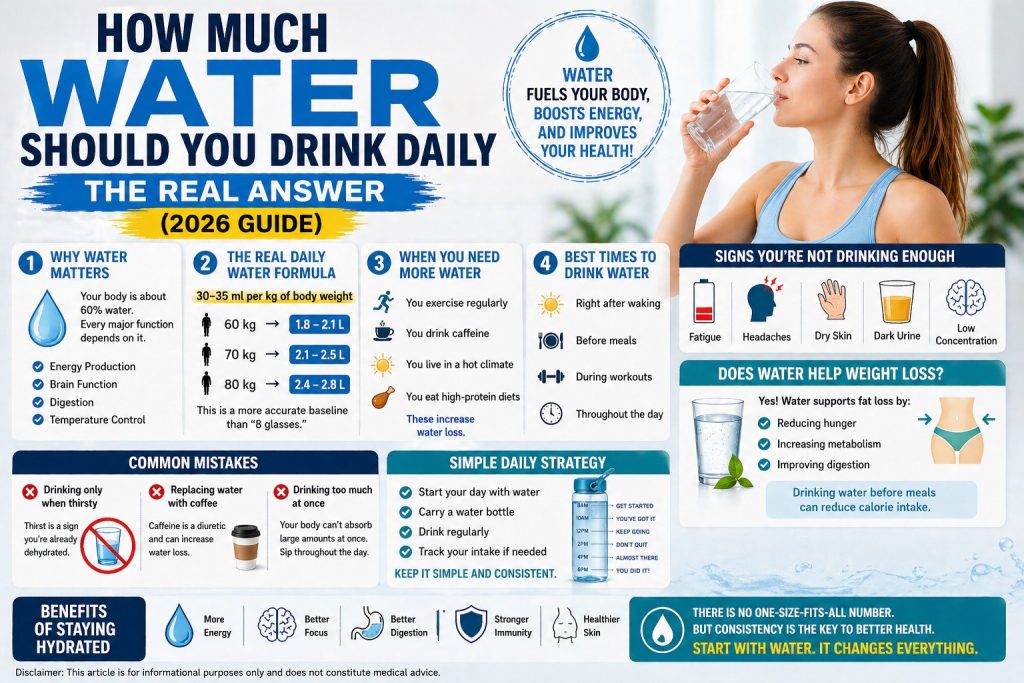
Instead of following outdated general advice, use this simple and practical formula:
👉 30–35 milliliters of water per kilogram of body weight
For example:
- 60kg → 1.8 to 2.1 liters
- 70kg → 2.1 to 2.5 liters
- 80kg → 2.4 to 2.8 liters
This gives you a personalized baseline that fits your body.
However, this is not a strict limit. It is a starting point. Your actual needs may be higher depending on your lifestyle.
[When Your Body Needs More Water]
There are several situations where your hydration needs increase significantly.
You should drink more water if:
- You exercise and sweat regularly
- You consume caffeine (coffee, tea, energy drinks)
- You live in a hot or humid environment
- You follow a high-protein or low-carbohydrate diet
- You are under stress
Each of these factors increases water loss or changes how your body uses fluids.
For example, caffeine acts as a mild diuretic, increasing urine output. High-protein diets require more water for digestion and metabolism. Hot weather increases sweating, which directly reduces your body’s water levels.
Ignoring these factors can lead to chronic dehydration without obvious symptoms.
[Clear Signs You Are Not Drinking Enough Water]
Your body constantly gives feedback about hydration levels.
Common signs of dehydration include:
- Constant tiredness
- Brain fog and poor concentration
- Headaches
- Dry skin and lips
- Dark yellow urine
- Dizziness
- Increased hunger or cravings
One important detail is that thirst is a delayed signal.
By the time you feel thirsty, your body is already slightly dehydrated. This is why relying only on thirst is not an effective hydration strategy.
[Why Drinking Water at the Right Time Matters]
Many people focus only on how much water they drink, but timing is just as important.
Your body absorbs and uses water more efficiently when intake is spread throughout the day.
Best times to drink water:
- Immediately after waking up
- 20–30 minutes before meals
- During and after physical activity
- Between meals throughout the day
Drinking water in the morning is especially important. After 6–8 hours of sleep, your body wakes up in a mildly dehydrated state. Starting your day with water helps restore balance, improves alertness, and supports metabolism.
[Common Hydration Mistakes to Avoid]
Even people who try to drink more water often make mistakes.
Here are the most common ones:
- Drinking large amounts at once
Your body cannot absorb large volumes efficiently. Most of it will be excreted quickly. - Only drinking when thirsty
As mentioned earlier, thirst is not an early signal. - Replacing water with coffee or soda
These drinks do not hydrate your body the same way water does. - Ignoring consistency
Drinking a lot one day and very little the next disrupts balance.
The key is steady, consistent hydration.
[How Water Affects Weight Loss]
Water plays a surprisingly powerful role in fat loss.
First, many people confuse thirst with hunger. This leads to unnecessary snacking and excess calorie intake.
Second, drinking water before meals can reduce appetite and help you eat less naturally.
Third, proper hydration supports metabolism. Your body needs water to efficiently break down fat and convert it into energy.
Studies have shown that people who increase their water intake often experience improved weight loss results without making major dietary changes.
[How Much Is Too Much Water?]
While dehydration is common, drinking excessive amounts of water can also be a problem.
Overhydration, or water intoxication, dilutes sodium levels in your blood and can lead to serious health issues.
However, this is rare and usually occurs only when someone drinks extremely large amounts in a short period.
The goal is balance — not extremes.
[Simple Daily Hydration Routine]
You do not need complicated rules.
Follow this simple routine:
- Drink 400–500 ml of water after waking up
- Keep a water bottle with you during the day
- Take small sips regularly instead of large amounts
- Drink water before meals
- Check your urine color (light yellow is ideal)
This approach is easy to follow and effective.
[The Long-Term Benefits of Proper Hydration]
When you stay properly hydrated, the benefits are noticeable:
- Higher energy levels
- Better concentration and mental clarity
- Improved digestion
- Healthier skin
- Reduced headaches
- Better physical performance
- Easier weight management
These changes do not happen overnight, but within a few weeks of consistent hydration, most people feel a clear difference.
[Conclusion]
There is no single number that works for everyone when it comes to water intake.
But by using a simple formula, paying attention to your body, and maintaining consistency, you can optimize your hydration easily.
Water is the foundation of your health.
Before focusing on complex diets or supplements, start with the simplest habit — drinking enough water every day.
It is one of the easiest changes you can make, and one of the most powerful.
⚠️ Disclaimer: This article is for informational purposes only and does not constitute medical advice.