[Introduction]
You finish a meal and expect to feel energized.
Instead, you feel slow, heavy, and sleepy.
This post-meal fatigue is extremely common, but most people misunderstand the cause.
It is not simply “eating too much.”
It is the result of how your body processes food, regulates blood sugar, and manages energy distribution.
If you understand what is happening inside your body after eating, you can fix this problem quickly and consistently.
[Why Energy Drops After Eating]
After you eat, your body shifts into digestion mode.
Blood flow increases to the digestive system, insulin is released, and energy is directed toward processing nutrients.
This process is normal.
However, when certain conditions are present — such as rapid blood sugar spikes or poor meal composition — this normal response becomes exaggerated.
The result is a noticeable drop in energy, often within 30–90 minutes after eating.
[Cause 1: Rapid Blood Sugar Spike and Crash]
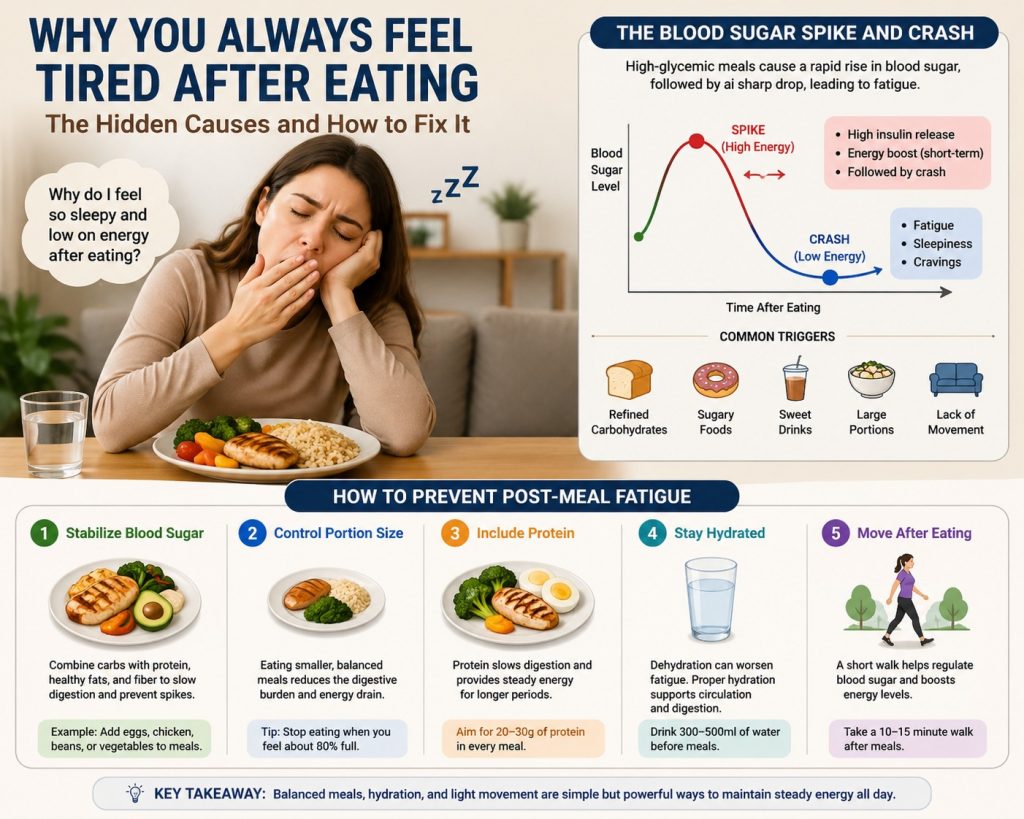
When you consume meals high in refined carbohydrates (such as white rice, bread, or sugary foods), glucose enters your bloodstream quickly.
This causes a sharp rise in blood sugar.
Your body responds by releasing insulin to lower glucose levels.
However, when the spike is too high, insulin response is also high.
This can lead to a rapid drop in blood sugar shortly after eating.
A study published in The American Journal of Clinical Nutrition showed that high glycemic meals are associated with increased fatigue and reduced alertness within hours of consumption.
This drop in blood sugar is one of the main reasons you feel sleepy after eating.
👉 Fix: Stabilize Post-Meal Blood Sugar
To prevent this spike-crash cycle, the goal is to slow down glucose absorption.
This works because slower digestion leads to a more stable insulin response, preventing sudden energy drops.
How to apply:
- Combine carbohydrates with protein and healthy fats
- Add fiber-rich foods (vegetables, whole grains)
- Avoid eating large amounts of refined carbs alone
For example, instead of eating plain rice, combine it with protein (chicken, eggs) and vegetables.
This slows digestion and stabilizes energy levels after eating.
[Cause 2: Excessive Meal Size Overloads Digestion]
Large meals require more energy to digest.
Your body increases blood flow to the digestive system, temporarily reducing circulation to other areas such as the brain.
This redistribution of blood flow can create a feeling of fatigue and mental sluggishness.
In addition, large meals increase the release of hormones such as insulin and serotonin, which can promote relaxation and sleepiness.
👉 Fix: Optimize Meal Size and Distribution
Reducing meal size helps maintain stable energy levels.
This works because smaller meals require less digestive effort and create a more controlled hormonal response.
How to apply:
- Avoid overeating in a single meal
- Divide food intake into balanced portions
- Stop eating when you feel about 80% full
This reduces the digestive burden and prevents sudden energy crashes.
[Cause 3: Low Protein Intake Reduces Sustained Energy]
Meals that lack protein tend to digest quickly and fail to provide sustained energy.
Protein slows gastric emptying and helps stabilize blood sugar.
It also supports neurotransmitter production related to alertness, such as dopamine.
Without sufficient protein, energy levels rise briefly and then drop quickly.
👉 Fix: Include Protein in Every Meal
Adding protein improves energy stability.
This works because protein reduces blood sugar fluctuations and supports longer-lasting satiety.
How to apply:
- Include a protein source in every meal
- Aim for 20–30g of protein per meal
- Use foods such as eggs, fish, chicken, yogurt, or legumes
This helps maintain steady energy instead of short spikes followed by crashes.
[Cause 4: Dehydration Reduces Circulation Efficiency]
Even mild dehydration affects energy levels.
When fluid levels are low, blood volume decreases slightly.
This reduces oxygen delivery to tissues and slows down physiological processes.
After eating, when your body is already focused on digestion, dehydration can amplify feelings of fatigue.
👉 Fix: Improve Hydration Timing
Proper hydration supports circulation and digestion.
This works because adequate fluid levels maintain blood volume and nutrient transport efficiency.
How to apply:
- Drink water before meals (300–500ml)
- Avoid relying only on drinks after eating
- Maintain consistent hydration throughout the day
This reduces fatigue and supports overall energy stability.
[Cause 5: Lack of Movement After Eating]
Remaining inactive after a meal can worsen fatigue.
When you sit or lie down immediately after eating, blood glucose remains elevated longer.
This prolongs the insulin response and increases the likelihood of energy crashes.
A study published in Diabetes Care showed that light walking after meals significantly reduces blood sugar spikes.
👉 Fix: Add Light Movement After Meals
Light movement improves glucose regulation.
This works because muscles absorb glucose from the bloodstream, reducing the need for large insulin spikes.
How to apply:
- Take a 10–15 minute walk after meals
- Avoid lying down immediately after eating
- Keep movement light, not intense
This simple habit can significantly reduce post-meal fatigue.
[How to Combine These Fixes Effectively]
The goal is not to apply one fix in isolation, but to combine them.
A practical system looks like this:
- Eat balanced meals with protein, fiber, and healthy fats
- Control portion size
- Stay hydrated before meals
- Move lightly after eating
When these habits are combined, the body processes food more efficiently and maintains stable energy levels.
[What Changes You Should Expect]
Instead of immediate dramatic changes, improvements happen in stages.
First, you notice reduced heaviness after meals.
Then, energy levels become more stable throughout the day.
Finally, the feeling of sleepiness after eating decreases significantly.
This progression indicates that blood sugar and hormonal responses are becoming more balanced.
[Conclusion]
Feeling tired after eating is not random.
It is a predictable response to how your body processes food.
By understanding the mechanisms behind blood sugar, digestion, and energy distribution, you can prevent these energy crashes.
The solution is not to eat less, but to eat smarter and support your body’s natural systems.
Small changes in how you structure meals can produce consistent and noticeable improvements in daily energy.
⚠️ Disclaimer: This article is for informational purposes only and does not constitute medical advice.