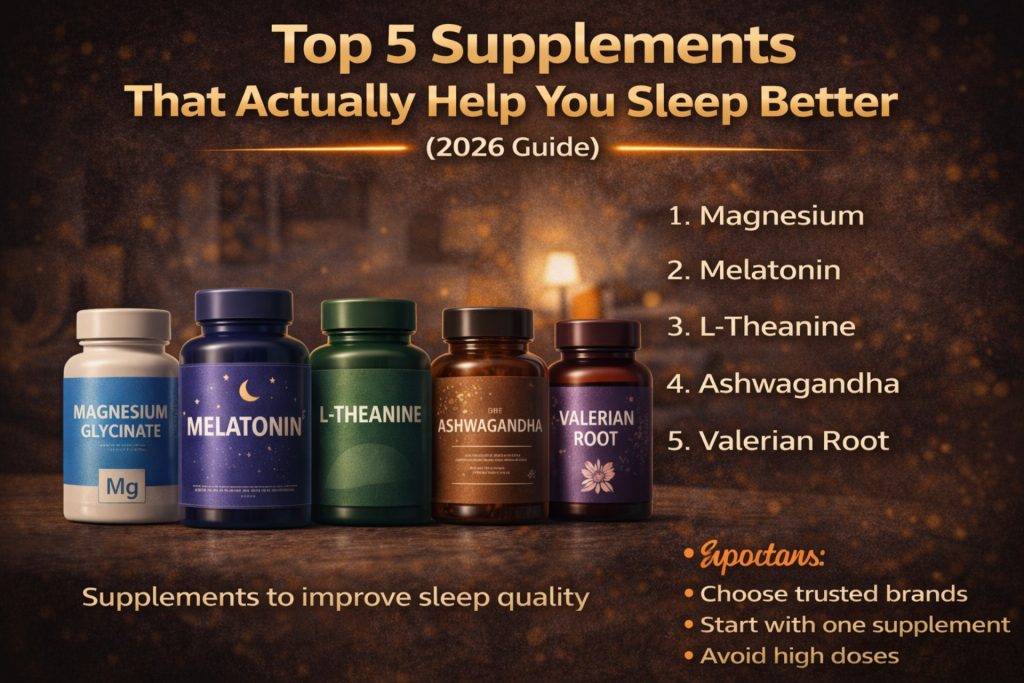
[Introduction]
If you struggle to fall asleep or wake up feeling exhausted, you are not alone. Sleep problems affect an estimated 1 in 3 adults worldwide. While healthy habits remain the foundation of good sleep, certain supplements have shown real benefits in clinical research. This guide breaks down the top 5 — what they do, how to take them, and who they work best for.
- Magnesium
Magnesium is one of the most critical minerals involved in sleep regulation. It activates the parasympathetic nervous system — the system responsible for calming your body before rest. It also regulates GABA, a neurotransmitter that quiets nerve activity and promotes deep, restorative sleep.
An estimated 48% of people do not get enough magnesium from diet alone. Deficiency is directly linked to difficulty falling asleep, frequent nighttime waking, and restless legs.
The best form is magnesium glycinate. It is chelated with the amino acid glycine, which provides its own calming effect. It absorbs well and is gentle on the stomach — far more effective for sleep than the cheap magnesium oxide found in most basic supplements.
💊 Dose: 200–400 mg, taken 30–60 minutes before bed.
✅ Best for: Staying asleep, muscle tension, restless legs - Melatonin
Melatonin is the hormone your brain naturally releases in the evening to signal it is time to sleep. Taking a supplement does not sedate you — it helps shift your sleep timing and reinforces your body’s internal clock.
Most over-the-counter products contain 5–10 mg, which is far more than necessary. Research shows doses as low as 0.5 mg can be effective. Higher doses may disrupt your natural hormone balance over time.
💊 Dose: 0.5–1 mg, taken 30–60 minutes before your target bedtime.
✅ Best for: Jet lag, shift work, irregular sleep schedules - L-Theanine
L-theanine is an amino acid found in green tea. It promotes calm by increasing alpha brain wave activity — the same state associated with meditation — without causing daytime drowsiness.
For sleep, it reduces the mental hyperactivity that keeps many people awake: racing thoughts, physical tension, and anxiety loops. It does not knock you out; it removes the barriers stopping you from sleeping.
It pairs very well with magnesium glycinate. The two work through different pathways and together produce a noticeably stronger calming effect.
💊 Dose: 100–200 mg, taken 30–60 minutes before bed.
✅ Best for: Racing thoughts, stress-related insomnia, anxiety before bed - Ashwagandha
Ashwagandha is an adaptogenic herb used in Ayurvedic medicine for over 3,000 years. Modern research shows it consistently reduces cortisol — the body’s primary stress hormone — which is one of the most common causes of poor sleep.
A 2021 double-blind, placebo-controlled trial found significant improvements in sleep onset, total sleep time, sleep efficiency, and overall sleep quality in participants taking ashwagandha extract. Unlike sedatives, it works gradually over several weeks.
💊 Dose: 300–600 mg of KSM-66 or Sensoril extract, taken in the evening. Allow 4–8 weeks for full effect.
✅ Best for: Chronic stress, high cortisol, long-term poor sleep quality - Valerian Root
Valerian root has been used as a sleep remedy since ancient Greece. Its active compounds interact with GABA receptors in the brain, producing a mild sedative effect — similar to how benzodiazepines work, but gently and without dependency risk.
Studies suggest it reduces the time it takes to fall asleep and improves sleep quality, especially with consistent use over 2–4 weeks. A single dose may not produce dramatic results, but regular use makes a noticeable difference.
💊 Dose: 300–600 mg, taken 30–60 minutes before bed.
✅ Best for: Difficulty falling asleep, mild insomnia, GABA support
[How to Choose the Right Supplement]
Start with one supplement at a time so you know what is actually working. Give it at least 2–4 weeks before evaluating. Match the supplement to your specific problem — if the issue is racing thoughts, start with L-theanine; if it is staying asleep, try magnesium. Choose products that are third-party tested and avoid proprietary blends where doses are hidden. Always use the lowest effective dose first.
[Conclusion]
Sleep supplements can be genuinely helpful, but they work best alongside good habits — not instead of them. Fix your schedule, reduce screens before bed, and manage stress. Then use supplements to fill in the remaining gaps.
For most beginners, magnesium glycinate and L-theanine taken together is the safest, most effective starting point. Both address the two most common sleep barriers: physical tension and mental restlessness.
Consistency matters more than anything. Track your sleep simply and give each supplement enough time to show real results.